Share
Stewed Safara Black Iberian Pork Cheeks | Lume Lento
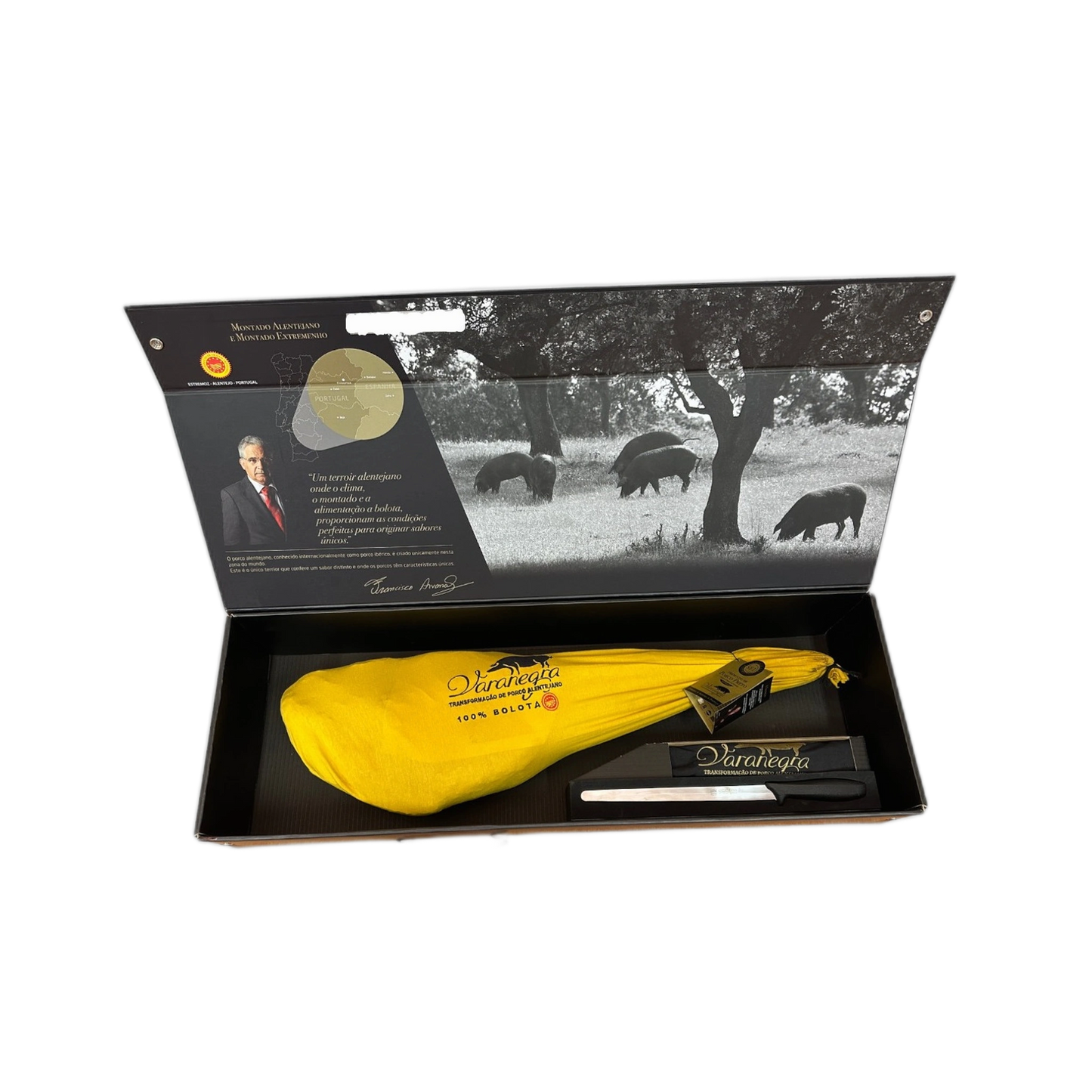
Some dishes call for time, not haste. The Safara braised black pork cheeks cook slowly with onion, tomato, carrot and thyme until they yield to a fork. To start the meal, I suggest slices cut from a whole Varanegra ham; to accompany the dish, Pêra-Manca Tinto. Neither the ham nor the wine goes into the braise described in the source.
A Safara recipe collected without haste
The Alentejo Gastronomic Charter records this recipe in Safara, in the municipality of Moura, based on an interview with Maria de Jesus Gaspar Fialho. The collection combines cheeks, olive oil, half a kilo of onions, garlic, bay leaf, parsley, thyme, tomato, pepper, carrot, water and salt. It indicates about an hour of cooking, while keeping an eye on the sauce. This version browns the meat first and braises it over very low heat for longer: these are our adaptations, guided by the actual texture of the cheeks.
Estimated yield: 4 people
Approximate total time: 3 hours and 15 minutes to 3 hours and 45 minutes, depending on the meat and the heat
Ingredients for 4 people
- 1 kg black pork cheeks, trimmed of the tougher outer membranes
- 500 g onions, thinly sliced into half-moons
- 3 garlic cloves, chopped
- 1 bay leaf
- 3 ripe tomatoes, peeled and chopped (about 450 g)
- 1 small red pepper, sliced into strips (about 150 g; the source does not indicate the colour)
- 2 medium carrots, cut into thick rounds (about 250 g)
- 50 ml olive oil
- A small bunch of fresh parsley, chopped, plus a little more for the potatoes
- 2 sprigs of fresh thyme
- About 250 ml hot water to start, plus a little more if necessary
- Salt, to taste; start with about 5 g and adjust at the end
- 800 g small potatoes for boiling and serving
How to prepare the cheeks
- Prepare the ingredients. Pat the cheeks dry with kitchen paper. Trim the tougher outer membranes without removing all the tissue that will soften during cooking. Season lightly with salt. Cut the vegetables as indicated.
- Brown the meat. Heat the olive oil in a heavy lidded pot. Brown the cheeks in batches, for about 3 to 4 minutes on each side, without overcrowding the bottom of the pot. Set them aside with their juices. In the source recipe, the sofrito comes before the meat; browning it first is an adaptation to give the sauce greater depth.
- Make the sofrito. In the same pot, cook the onion, garlic and bay leaf over medium-low heat for 12 to 15 minutes, stirring until the onion is soft. Add the tomato, pepper and carrot and cook for another 8 minutes. Add the parsley and thyme.
- Braise over low heat. Return the cheeks and their juices to the pot. Add about 250 ml hot water; the liquid does not need to cover the meat. Cover and maintain only a gentle simmer for about 2 to 2 and a half hours. Turn the pieces every 30 minutes. If the bottom dries out, add hot water little by little, about 50 ml at a time. The right point is when a fork enters easily and the meat yields without resistance. If it is still firm, continue braising and keep an eye on the sauce: the time is only a guide.
- Prepare the accompaniment. During the final 25 minutes, boil the potatoes in water until tender. Drain them and sprinkle with parsley, as suggested by the source.
- Reduce and let rest. Remove the cheeks when tender. If the sauce is thin, reduce it uncovered for 5 to 10 minutes; if it is too thick, add a little hot water. Taste and adjust the salt. Return the meat to the sauce and leave it to rest, covered, for 10 minutes. Serve on warmed plates with the potatoes separately and a spoonful of sauce.
The decisive detail
Do not let the pot boil vigorously. A gentle simmer allows the meat to soften without reducing the sauce too quickly. Different cuts and pots affect the cooking time; do not remove the cheeks simply because two hours have passed.
Whole Varanegra ham to start, Pêra-Manca Tinto at the table
From a whole Varanegra DOP Alentejo 100% Acorn-Fed Black Pork Ham, made from black pork and with an advertised curing period of 40 months, cut about 60 to 80 g into very thin slices for four people and serve them as a starter. The associated product is the whole piece, with a 7.5 to 8 kg variant; the entire ham is not used for this meal. The ham is our suggestion for the meal, not an ingredient in the Safara recipe.
With the cheeks and reduced sauce, I suggest Pêra-Manca Tinto 2019, served at about 17 °C, the temperature indicated on the product sheet. The wine is produced by the Eugénio de Almeida Foundation (FEA), which is also responsible for Cartuxa wines. The richness of the braise supports the choice of a structured red; reserve the bottle for the glasses, as the source recipe does not call for wine in the pot. This pairing is an editorial suggestion, not an indication from the Charter.
Advance preparation
You can braise the meat the day before. Cool it promptly and store it with the sauce in a sealed container in the refrigerator for up to 2 days. Reheat over low heat with a little water, until piping hot in the centre. Boil the potatoes and slice the ham close to serving time.
More flavours of the Alentejo
For another cooking method and another cut of pork, discover Cabeço de Vide potato migas with fried spare ribs. Here, it is time in the pot, rather than frying, that defines the dish.
Source and adaptations
Alentejo Gastronomic Charter (2013), p. 880, “Braised Black Pork Cheeks”, Safara, Moura. Interview with Maria de Jesus Gaspar Fialho by Joaquim Pulga, 2012.
We retained the main ingredients from the source: 1 kg of cheeks, 500 g of onions, 3 garlic cloves, bay leaf, parsley, thyme, 3 tomatoes, 1 pepper and 2 carrots. We set quantities for olive oil, water, salt and potatoes to make the method clear; chose a red pepper, browned the meat before the sofrito and extended the cooking time to about 2 to 2 and a half hours, instead of the hour indicated in the source. The meat’s actual doneness takes precedence over the time. The boiled potatoes sprinkled with parsley are an accompaniment from the source. The ham served as a starter and the Pêra-Manca Tinto are our suggestions, not ingredients in the braise. Time and yield are estimates, not the results of a kitchen test.
Illustrative image generated for this article.