Share
These Cabeção Biscuits: Alentejo Christmas Biscuits
Os Esses de Cabeção are butter biscuits piped into an S shape with a fluted nozzle. The surface is marked with the piping ridges, and the edges turn slightly golden in the oven. The Alentejo Gastronomic Guide records this recipe in Cabeção, in the municipality of Mora, associating it with Christmas and Carnival.
Estimated yield: about 50–60 biscuits, depending on size
Preparation and shaping: about 30 minutes
Oven: 15–20 minutes per batch, about 45–60 minutes for three batches
Final cooling: about 15–20 minutes
Approximate total time: 1 hour 30 minutes to 1 hour 50 minutes, including three batches baked in succession
Ingredients
- 5 medium egg yolks
- 2 medium egg whites
- 250 g sugar
- 250 g butter, plus a little extra for greasing the baking trays
- 600 g plain wheat flour, plus a little extra for dusting the baking trays
Equipment: large bowl, electric mixer or whisk, spatula, sturdy piping bag with a wide fluted nozzle, about 12–15 mm, two baking trays measuring approximately 40 × 30 cm and a wire rack for cooling.
Preparation
-
Prepare the oven and baking trays.
Preheat the oven to 170 °C, without a fan. Grease the baking trays with a thin layer of butter, dust with flour and shake off the excess. Melt the 250 g of butter over low heat and leave to cool until lukewarm, without letting it solidify. Separate the yolks from the whites and set aside only the five yolks and two egg whites specified for the dough. -
Beat the eggs with the sugar.
Place the five egg yolks and two egg whites in the bowl with the 250 g of sugar. Beat for about 2–3 minutes, until the mixture is smooth and lighter in colour. Gradually add the melted butter, now lukewarm, stirring it in. -
Add the flour.
Gradually add the 600 g of sifted flour, folding it in with a spatula until no loose flour remains. The dough will be firm. Do not knead it for long or add more flour. Work with it while the butter has not yet cooled completely, and keep the portion waiting covered. -
Pipe the S-shaped biscuits.
Fill the cookie press in small batches, using the wide fluted nozzle. Pipe one biscuit first to check that the dough passes through the nozzle without too much effort. Pipe S-shaped letters about 7–8 cm long, of a similar thickness, leaving approximately 3 cm between them. Avoid making the two curves too tight. If the dough is difficult to pipe, follow the instructions in the troubleshooting section before forcing the press. -
Bake in batches.
Bake one tray at a time on the middle rack for about 15–20 minutes. Start checking at 12 minutes: the biscuits should be lightly golden around the edges and underneath, without the whole surface browning. Break open a test biscuit to check that the inside is cooked through, with no wet dough. Bake for a few more minutes if needed. Repeat with the remaining dough, letting each tray cool before greasing, dusting and piping onto it again. -
Let them set and cool.
Leave the biscuits on the tray for about 5 minutes, as they will still be fragile when they come out of the oven. Carefully transfer them to a wire rack and let them cool completely before storing. The 15–20 minutes of cooling mentioned in the heading refer to the last batch; earlier batches can cool while the next ones bake.
Tips for keeping the shape
Use a wide nozzle and make all the biscuits a similar thickness. A still-hot baking tray can soften the butter before the dough goes into the oven and make the design spread. Also avoid applying a thick layer of grease when greasing the tray.
Wine and something sweet to serve alongside
Serve the S-shaped biscuits with a small glass of Vidigueira DOC Red Liqueur Wine. The notes of red berries, vanilla and dried fruit complement the buttery flavour and golden colour of the biscuits.
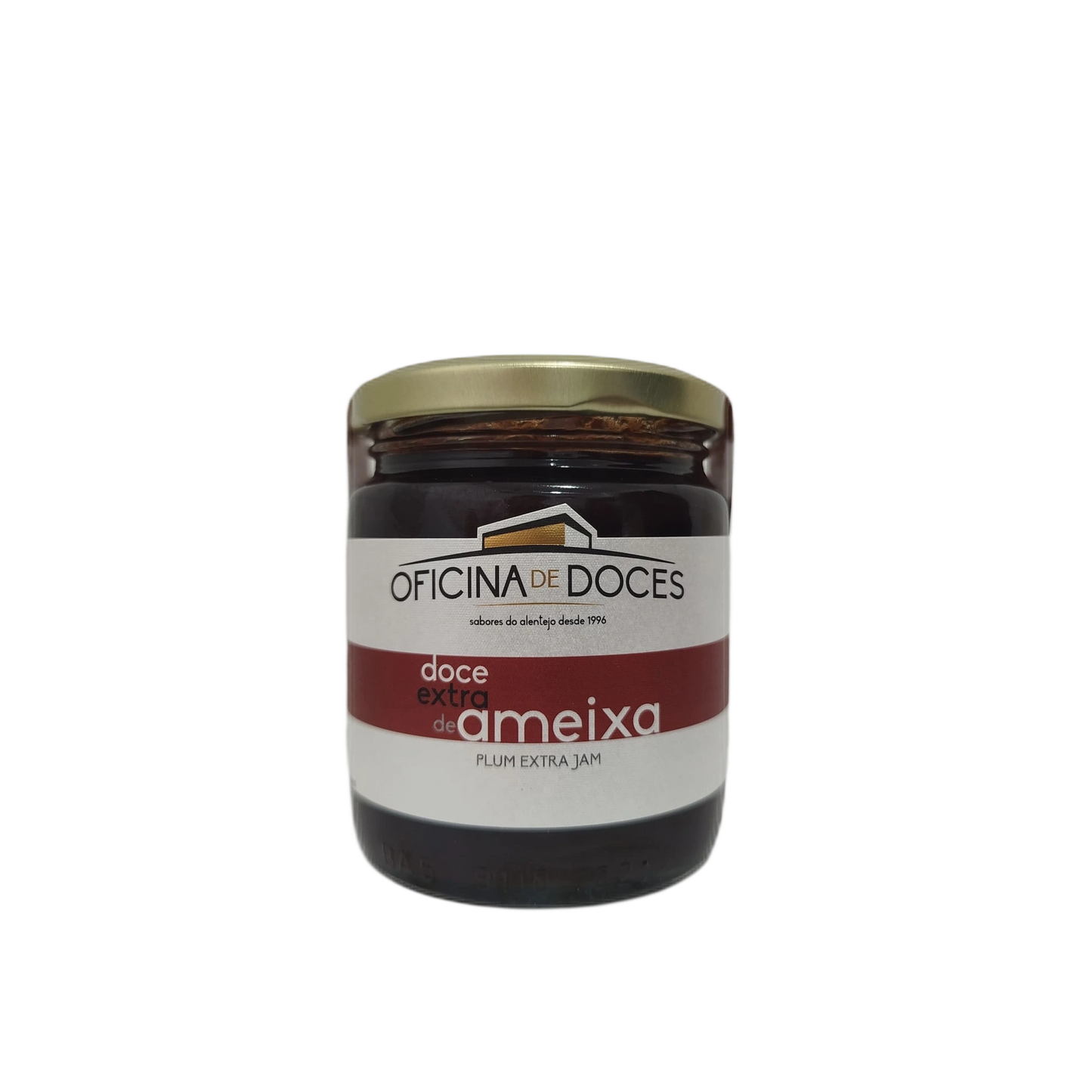
To vary the serving, put some Extra Plum Jam in a separate bowl. Its fruity, slightly tangy note contrasts with the butter; add it only when ready to eat so the biscuits don’t soften.
Make ahead and storage
You can bake the Esses the day before. Once completely cool, store them in a tightly sealed container in a cool, dry place, away from heat. Do not seal the container while they are still warm: condensation will soften them. Keep the preserve separate until serving.
Frequently asked questions
The dough won’t pass through the piping syringe. What should I do?
Make sure the nozzle has a wide opening and the piping syringe is not too full. If the butter has cooled and the dough has hardened, gently warm a small portion between clean hands and try again. Do not force the mechanism or add water or milk to make it runny.
The ridges disappeared in the oven. How can I prevent this?
Pipe onto a cold baking tray, lightly greased only. If the dough is very soft because the butter is still warm, let it rest briefly until it firms up, without letting it harden. Pipe one test biscuit before shaping the whole tray.
More Alentejo biscuits and broas
Also try Tramaga Sweet Potato Biscuits, shaped by hand and flavoured with cinnamon and fennel.
Source and adaptations
Carta Gastronómica do Alentejo (2013), p. 268, entry 0174, “Esses”, Cabeção, Mora. Interview with Emília Maria Jacinto Rosa Berreichão, by Adelaide Martins of Leader-Sor, in 2012.
Recipe collected in Alto Alentejo, adapted by Herdade do Estacal for the blog “À Mesa com o Alentejo”. The five egg yolks, two egg whites, 250 g of sugar, 250 g of butter and 600 g of flour are unchanged, as are the melted butter, the piping syringe with a fluted nozzle, and the greased and floured baking trays. The medium egg size, plain flour, nozzle and biscuit dimensions, temperature of 170 °C, and baking and cooling instructions are home adaptations. The source specifies a medium oven; the yield, number of batches and timings are estimates.
Illustrative image generated for this article.