Atalaia, Gavião butternut squash porridge with honey
This pumpkin and honey porridge is served warm, by the spoonful, with the smoothness of the milk and the flavour of the pumpkin in every portion. The recipe comes from Atalaia, in the municipality of Gavião: the pumpkin is boiled, thoroughly drained and passed through a food mill before being added to the milk thickened with flour. A suggestion for an autumn snack or for the São Martinho table.
The Alentejo Gastronomic Guide records this preparation in an interview with Cassilda Marques Chambel, a cook from Atalaia, conducted by Adelaide Martins of Leader-Sor in 2012. The honey is added at the end, to taste, and the porridge is served while still warm.
Estimated yield: 6 small bowls.
Preparation: about 15 minutes.
Cooking and finishing: about 35–45 minutes, plus 10 minutes to drain.
Estimated total time: 1 hour to 1 hour and 10 minutes.
Ingredients for 6 bowls
- 750 g pumpkin, peeled and deseeded
- 500 ml whole milk
- 20 g plain wheat flour, about 2 level tablespoons
- 15 g butter, about 1 level tablespoon
- 60–80 g honey, adjusting to the sweetness of the pumpkin
- A pinch of salt
- Water for cooking the pumpkin
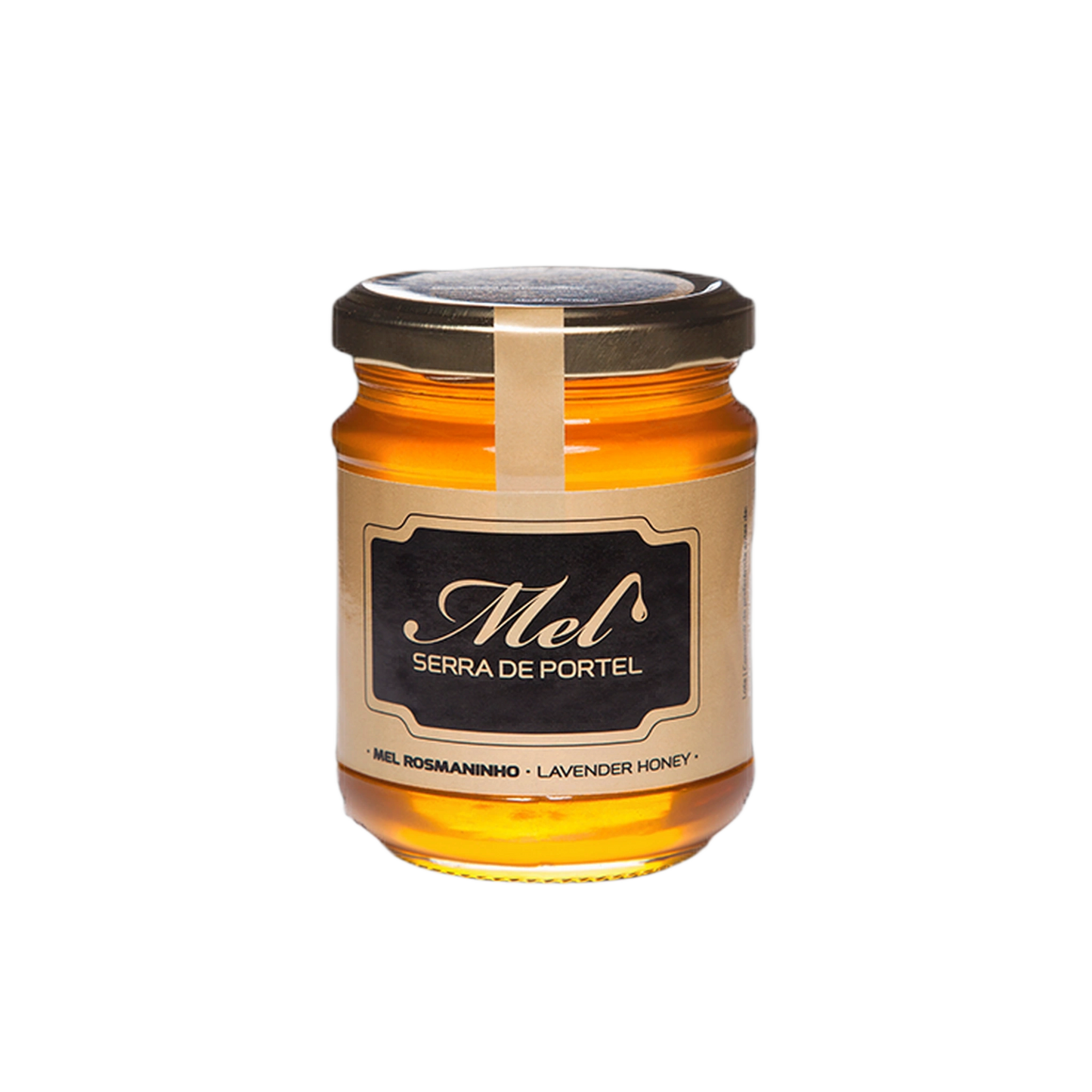
Use Serra de Portel Rosemary Honey, 270 g. Its delicate, light aroma complements the pumpkin without overpowering it.
Preparation
-
Cook the pumpkin.
Cut the pumpkin into roughly 2–3 cm cubes and place them in a saucepan. Add enough water to cover and a pinch of salt. Bring to the boil, then reduce to a gentle simmer. Cook for about 15–20 minutes, until the cubes break apart easily when pressed with a fork. -
Drain and pass through a food mill.
Drain the pumpkin in a colander and leave it to release its water for about 10 minutes. Discard the cooking water. Pass the flesh through a food mill into a bowl. If water is still pooling on the surface, leave it to drain a little longer before adding it to the milk. -
Thicken the milk with the flour.
In a heavy-based saucepan, whisk the flour into 100 ml of the cold milk until smooth. Gradually add the remaining 400 ml. Heat over medium heat, stirring along the bottom, until thickened and beginning to bubble. Reduce the heat to low and cook for about 3–5 minutes, stirring constantly, to cook out the raw flour taste. Add the butter and stir until melted and incorporated. -
Add the pumpkin and honey.
Add the pumpkin purée to the cream, in two or three batches, stirring to combine well. Add 60 g of honey and heat over low heat for about 3–5 minutes, stirring to prevent it from sticking. Taste and add up to 20 g more honey, if desired. The porridge should be creamy and thick, falling slowly from the spoon, without the firmness of a pudding. Divide between bowls and serve warm.
It starts with pumpkin
Draining the flesh well prevents the water from diluting the milk cream. A food mill breaks down the pumpkin without incorporating the cooking liquid; pass it through while it’s hot, when it offers less resistance.
Keep the heat low once the milk has thickened and run the spoon along the bottom and corners of the pan. The mixture thickens quickly and can stick if left unstirred.
Wine pairing
To accompany a bowl of this porridge, we suggest a small glass of Vasquinho Sweet Red Wine. Its sweet profile, with notes of fig and almond, complements the honey and the pumpkin’s mild flavour.
Preparing ahead and storage
You can cook, drain and pass the pumpkin through a food mill ahead of time. Cool it quickly in a shallow container and store it covered in the fridge. Finish making the porridge close to serving time, so you can bring it hot to the table.
Cool leftovers quickly and store them in sealed containers in the fridge. To reheat, warm only the portion you need over a low heat, stirring until piping hot throughout. If it has thickened too much, add a little milk gradually to restore its creamy texture.
Frequently asked questions
The porridge turned out too runny. How can I adjust the texture?
Keep it over a low heat, uncovered, stirring along the bottom to evaporate some of the water. The pumpkin may not have been drained well, or it may be more watery. Don’t add flour directly to the hot porridge, as it will form lumps; for this preparation, the flour is mixed into cold milk before heating.
The milk turned lumpy before I added the pumpkin. What should I do?
Remove the pan from the heat and strain the cream through a fine sieve, breaking up the lumps with a spoon. Return it to the pan and let the flour finish cooking over a low heat, stirring, before adding the butter and pumpkin.
More Alentejo spoon desserts
Also try Alcáçovas Rice Pudding Without Eggs, another recipe where the milk slowly thickens in the pan.
Source and adaptations
Recipe “Pumpkin Porridge with Honey”, from the Alentejo Gastronomic Guide (2013), p. 197, entry 0103, Atalaia, Gavião. Interview with Cassilda Marques Chambel by Adelaide Martins, Leader-Sor, in 2012. Adapted by Herdade do Estacal for the blog “À Mesa com o Alentejo”.
The source lists one pumpkin, with no weight specified, and honey to taste. The 750 g of raw flesh, amount of honey, whole milk, approximate spoon measurements, timings and yield are guidelines for this adaptation. The 500 ml of milk, cooked pumpkin passed through a food mill and hot serving are retained. The original list mentions margarine, but the method refers to butter; we follow the latter.