São Martinho Cakes from Cercal do Alentejo
The Saint Martin’s cakes of Cercal do Alentejo combine cornmeal, cinnamon and lemon zest in a dough made with lard, eggs and a little brandy. They are shaped into small balls, flattened by hand and baked in the oven. They make a lovely treat to enjoy over a chat around the table on autumn afternoons.
From Cercal to the Pão por Deus tradition
The Alentejo Gastronomic Guide records this recipe in Cercal do Alentejo, in the municipality of Santiago do Cacém, based on a 2012 interview with Helena Melo. The account links the cakes to Saint Martin’s Day and the All Saints’ Day offerings: those who went begging for Pão por Deus carried a taleigo bag and received seasonal produce such as sweet potatoes, apples, chestnuts, walnuts, pomegranates and these little cakes. At the time of the interview, the Baú Doce bakery was keeping the tradition alive by selling them in small cloth bags.
Estimated yield: 20 to 22 small cakes.
Preparation and shaping: about 25 minutes.
Dough resting time: 10 minutes.
Oven: about 20 to 25 minutes, in one batch.
Final cooling: about 15 minutes.
Estimated total time: 1 hour and 10 minutes to 1 hour and 15 minutes.
Ingredients
- 250 g fine yellow cornmeal, not precooked
- 80 g sugar
- 75 g lard at room temperature, plus about 5 g to grease the tray
- 2 medium eggs, about 100 g without shells
- 10 ml grape brandy
- 1 level teaspoon ground cinnamon
- Zest of 1 small lemon, yellow part only
Preparation
-
Prepare the oven and tray.
Preheat the oven to 175 °C, without the fan. Lightly grease a baking tray about 40 × 30 cm with lard. If the lard is in the fridge, let it soften before you start so it mixes evenly into the dough. -
Combine and knead.
Put the cornmeal, sugar, cinnamon and lemon zest in a wide bowl. Add the 75 g of lard, the lightly beaten eggs and the brandy. Mix with a spoon, then knead by hand for about 2 to 3 minutes, until the fat is evenly distributed and the dough holds together when pressed. Cover and leave to rest for 10 minutes so the flour can absorb the moisture. -
Shape the cakes.
Take portions of about 25 g, press them between your hands and shape them into small balls. Flatten them with your palms into discs about 1 cm thick. Arrange them on the tray, leaving approximately 2 cm between cakes. Cornmeal dough is not very elastic: gently press together any larger cracks around the edges, without trying to stretch it. -
Bake until firm.
Place the tray on the middle shelf for about 20 to 25 minutes. Start checking at 18 minutes: the surface should be dry and the base and edges lightly golden. Let a test cake cool slightly and break it open; the centre should be firm, with no wet, doughy batter. If necessary, bake for a few more minutes, without letting the base get too dark. -
Leave to cool.
Leave the cakes on the tray for about 5 minutes, as they will be fragile when they come out of the oven. Transfer them with a spatula to a wire rack and leave to cool completely before storing or placing them in a cloth bag.
Tips for working with corn dough
Use fine flour: a coarse grind changes the absorption and can leave the texture too grainy. The dough should hold together when pressed, not have the elasticity of wheat dough. Make all the discs a similar thickness and avoid squeezing the cakes while they are still hot as you remove them from the tray.
Wine and sweets at the table
Serve with a small measure of Cartuxa Licoroso Tinto Reserva 2012. The wine’s sweetness complements the cinnamon and toasted flavour of the cakes; the recommended serving temperature is 12 °C.
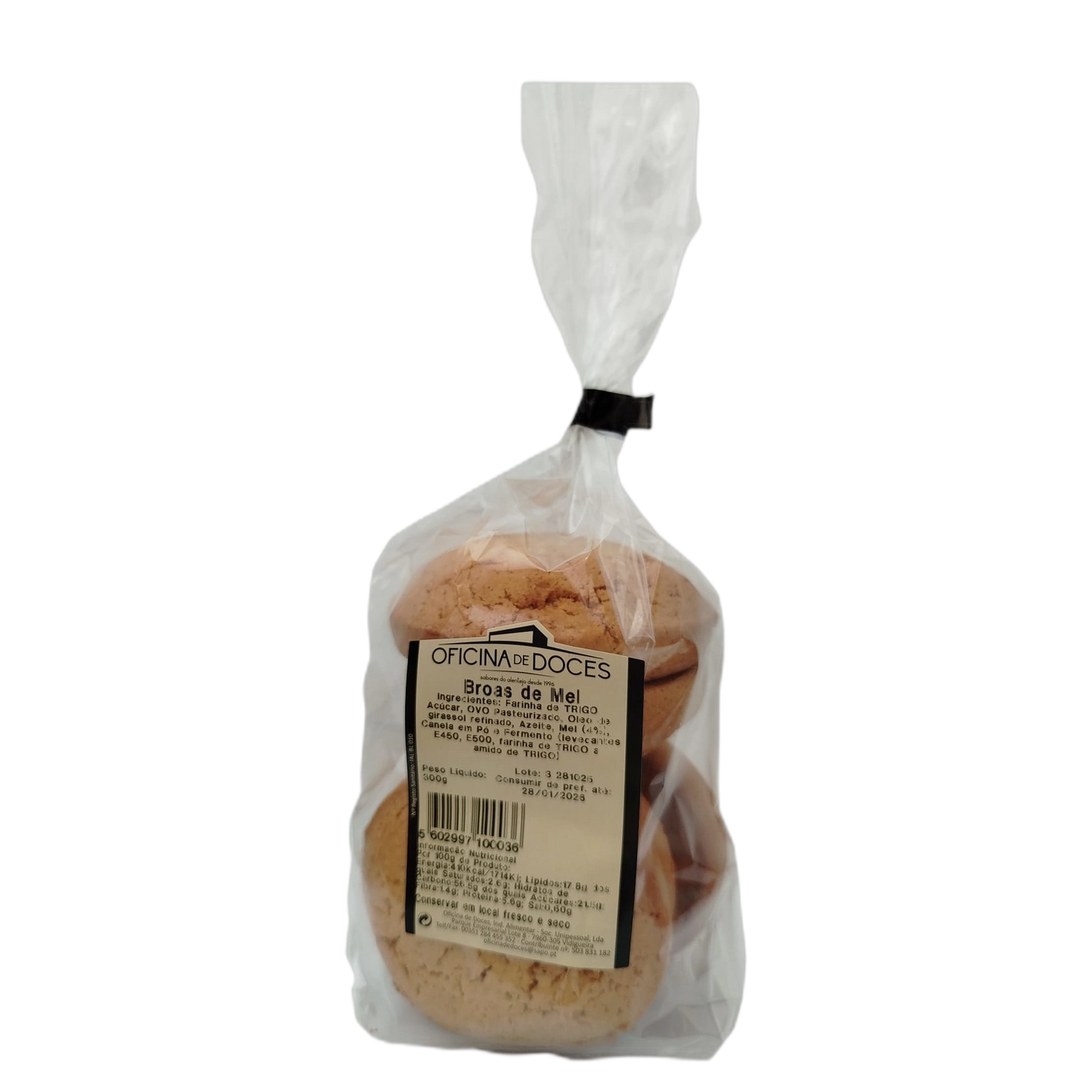
To complete the table with another ready-to-serve specialty, add the Honey Biscuits from our shop.
Storage
Once completely cool, store the cakes in a tightly sealed container in a cool, dry place. If you want to give them as a gift in a cloth bag, put them in the bag shortly before handing them over to limit their exposure to moisture in the air.
Frequently asked questions
Can I use cornstarch instead of corn flour?
Not in this adaptation. Cornstarch is not the same as the fine corn flour listed in the ingredients and changes the dough’s structure. Use fine yellow corn flour, not precooked.
The cakes crumble when they come out of the oven. What should I do?
Let them firm up on the tray before lifting them, and use a wide spatula. They are more fragile while hot. If they also crumble once cool, check that the dough was well bound before shaping and that the discs were not too thin.
More Alentejo sweets
For another way to work the dough by hand, try Nógado from Cabeço de Vide with Honey and Lemon, made with small pieces of fried dough coated in honey.
Source and adaptations
Gastronomic Guide to the Alentejo (2013), p. 1056, entry 0951, “St Martin’s Cakes”, Cercal do Alentejo, Santiago do Cacém. Interview with Helena Melo by Inês Olaio Marques, ADL, in 2012.
Recipe collected in the Alentejo, adapted by Herdade do Estacal for the blog “At the Table with the Alentejo”. The source lists the ingredients without quantities, shaping the dough into flattened balls and baking them in a medium oven on greased trays. The measurements, fine non-pre-cooked flour, wine brandy, resting time, dimensions, 175 °C, and baking and storage instructions belong to this home adaptation. Yield and timings are estimates.

Illustrative photograph